
Why Drainage Is One of the Most Important Parts of Your New Home in Barbados
When you build a home in Barbados, drainage probably is not the first thing on your mind. You are thinking about the kitchen layout, the pool, the bathrooms, and those views across the Caribbean Sea.
That is completely normal. But good drainage protects every one of those features.
Barbados receives an average of around 1,525 mm (60 inches) of rainfall per year, with roughly two-thirds of that falling between June and November during the wet season. Inland elevated areas receive considerably more than coastal zones. Rainfall events can be sudden and intense. Water moves fast across sloping ground and collects around buildings. When that water has nowhere to go, it damages foundations, landscaping, walls and external finishes — repairs that cost far more than getting the drainage right from the start.
At Berkan Construction Services, we bring practical experience in both Caribbean tropical construction and European building standards. We work alongside architects, engineers, and other consultants to ensure drainage is part of the construction process from day one, not an afterthought once problems appear.
Why Does Drainage Matter So Much in Barbados?
Barbados has varied terrain and geology. The coral limestone cap that covers much of the island behaves differently from the Scotland District’s clay-rich soils. A property on a flat coastal site faces different water challenges from a home on an elevated inland lot.
If the site does not manage rainfall correctly, problems develop. These typically include water collecting against external walls, saturated ground around foundations, erosion of soil and landscaping, water entering garages or lower-level spaces, damage to external paving, flooding around terraces and entrances, persistent damp caused by poor water management, and increased pressure on retaining structures.
The answer is not simply installing a few drains. The entire site needs to work as a coordinated system.
Start With the Site: Drainage Planning Before Construction Begins
Drainage planning should begin before any construction starts on site.
Your architect and engineering team should assess the site’s existing levels, natural water movement patterns and the proposed building position. A professional construction team then translates those plans onto the actual ground.
This step matters because construction changes the ground. Excavation, foundations, retaining walls, paving and landscaping all alter how water moves across a site. A drainage solution that worked on paper may require careful coordination once earthworks begin.
In our experience managing projects across Barbados, we have found that early site supervision prevents most drainage-related issues. Problems caught during construction cost a fraction of what they cost to fix after handover.
How Should Sloping Sites in Barbados Handle Drainage?
Many of Barbados’s most attractive residential sites sit on slopes. Those slopes deliver spectacular views of the coastline or the island’s interior. They also create real construction challenges.
Water naturally travels downhill. Your home may sit directly in its path unless the site manages that flow correctly.
Depending on design and site conditions, drainage solutions for sloping properties may include interceptor drains to catch water before it reaches the building, surface channels to direct flow across paved areas, French drains (subsurface drainage systems), catch basins at low points, culverts for crossing driveways or access roads, graded surfaces designed to move water away from the structure, retaining wall drainage to relieve hydrostatic pressure, and properly positioned discharge points that direct water safely off the property.
The correct solution depends on your individual property. No single drainage system works for every site in Barbados.
What Is a French Drain and How Does It Work?
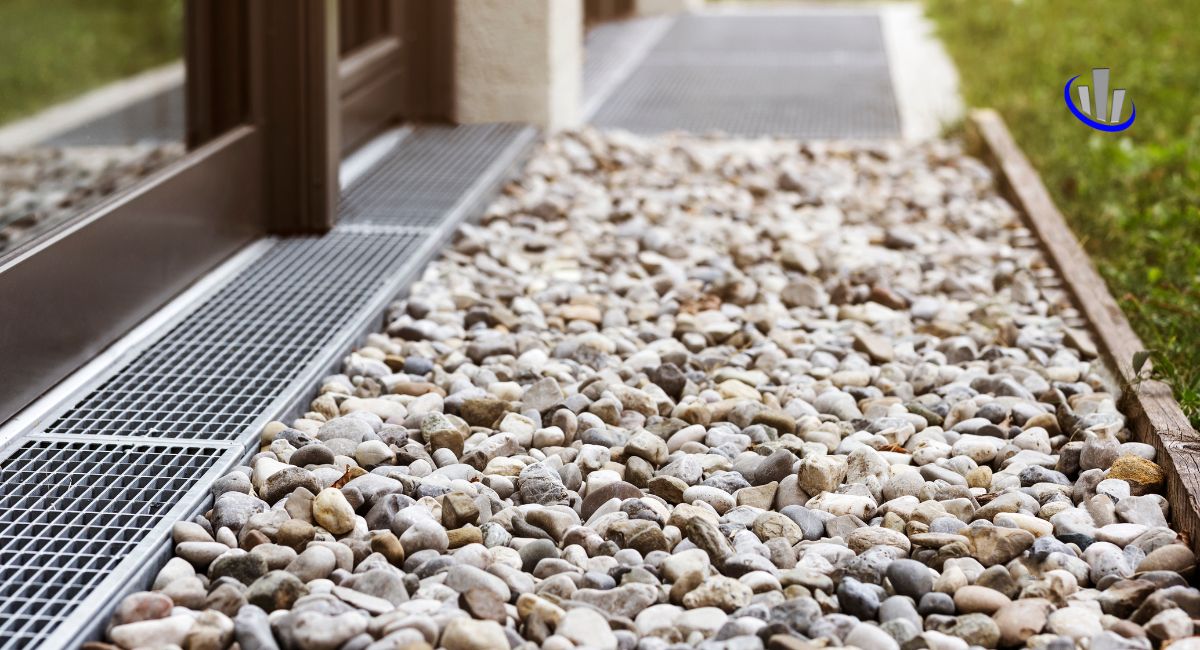
A French drain is a subsurface drainage system that collects groundwater or surface water and redirects it away from areas that need protection. Despite its name, it has nothing to do with France — it is named after Henry F. French, a 19th-century American lawyer, judge and agriculturist who popularised the technique in his 1859 book Farm Drainage.
The system typically consists of a perforated pipe laid in a trench and surrounded by gravel or other suitable drainage aggregate. Water seeps through the gravel, enters the pipe through its perforations, and flows by gravity to a safe discharge point.
French drains prove particularly useful on sloping or water-prone sites in Barbados. However, they must be designed and installed correctly. A poorly installed system — with incorrect falls, inadequate filter fabric, or the wrong aggregate — can block, fail and create worse problems than having no drain at all.
This is where construction experience matters. The difference between a French drain that works for decades and one that fails within two years often comes down to installation quality and proper material selection.
How Does Roof Drainage Protect Your Home?
Drainage does not stop at ground level. Your roof collects a significant volume of rainwater during a tropical downpour. During an intense Caribbean storm, a 200 m² roof can shed more than 2,000 litres of water in under an hour.
That water needs controlled routes away from the building. Gutters, downpipes, roof outlets and surface drainage should all work together as a connected system.
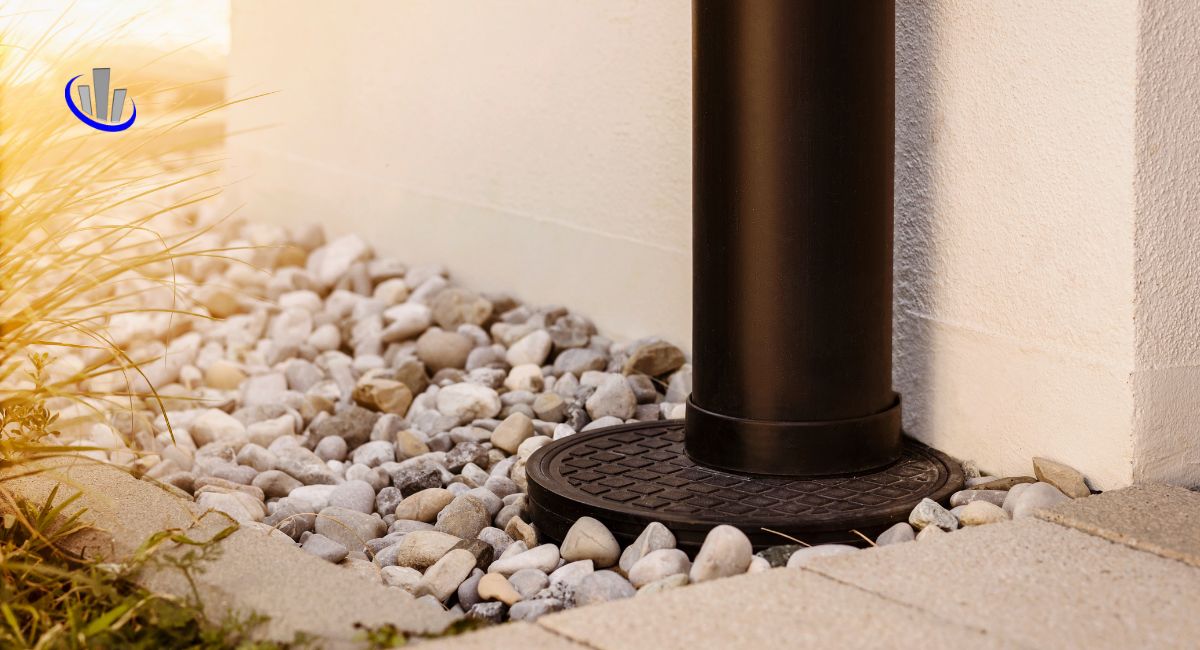
The positioning of downpipes also matters more than many people realise. Large volumes of roof water discharging directly beside foundations can cause localised soil erosion and settlement over time. Water dumped onto a frequently used walkway creates a slip hazard, and damages finishes.
Good design routes roof water into the site’s overall drainage network, moving it away from the building to a suitable discharge point or storage system.
Why Do Retaining Walls Need Their Own Drainage?
Retaining walls deserve particular attention on sloping properties in Barbados. These structures hold back soil, but they also need to deal with the water pressure that builds up behind them.
Without suitable drainage, water accumulates behind a retaining wall and creates hydrostatic pressure. That pressure adds stress to the structure. Over time, it can cause cracking, bowing or even structural failure — problems that are expensive and disruptive to repair.
Proper drainage behind the wall, typically using a combination of drainage aggregate, filter fabric and weep holes or collector pipes, manages this water and protects the wall’s long-term performance.
This clearly shows why different parts of a construction project cannot operate in isolation. Foundations, retaining walls, drainage and landscaping all interact. A construction team needs to coordinate these elements, not treat them as separate trades working independently.
Can Rainwater Harvesting Work Alongside Your Drainage System?
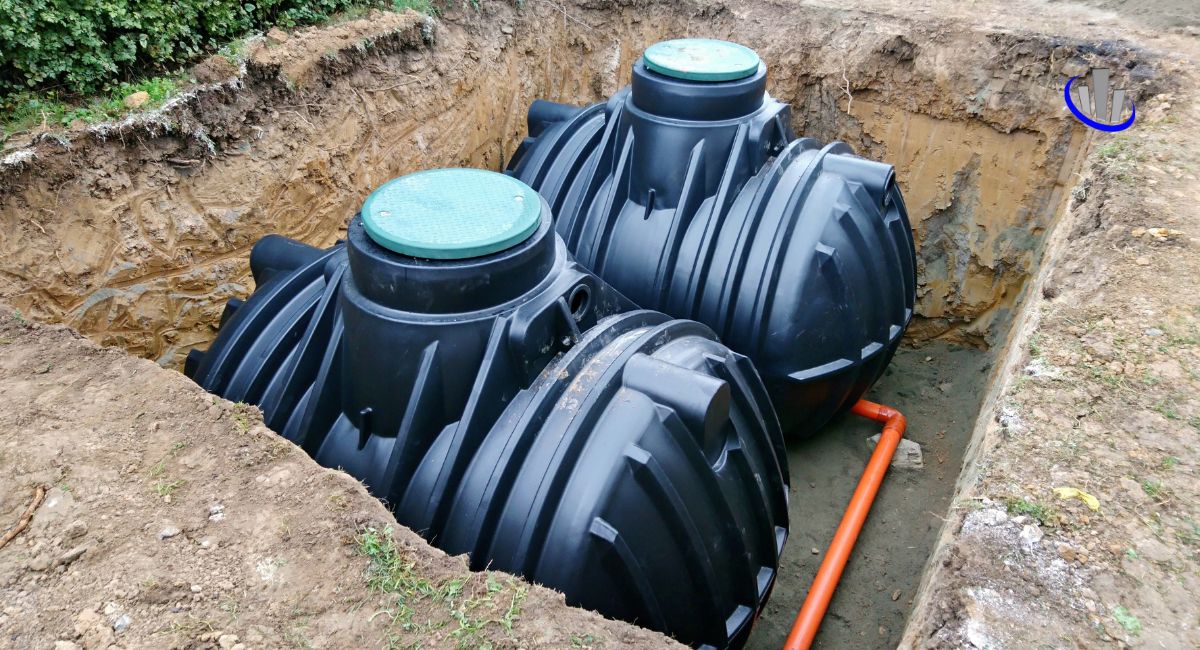
Water management can also create an opportunity. Many new developments in Barbados now incorporate rainwater storage into their plans.
Captured rainwater can support irrigation and other non-potable uses, depending on the system design and applicable local requirements. The Barbados Water Authority and your engineering consultant can advise on what is appropriate for your property.
From a construction perspective, the key is to coordinate tanks, pipework, drainage connections and access points before the relevant work begins. Retrofitting rainwater harvesting after construction is possible, but significantly more expensive and disruptive.
Does Your Drainage Affect Your Neighbours?
Yes, and this is an important consideration that some property owners overlook.
Water leaving your property can affect neighbouring land. A responsible drainage strategy considers where water goes after it leaves your roof, driveway and site. This becomes particularly critical on sloping land.
Diverting water towards a boundary does not solve the problem — it transfers it. The solution needs to manage water responsibly, comply with applicable regulations, and avoid creating issues for adjacent properties.
Your architect and engineering team should address this during the design phase, and the construction team needs to build it as designed.
What Are the Warning Signs of Poor Drainage?
Poor drainage rarely announces itself immediately. You may only notice the consequences after several heavy rain events during the wet season.
Warning signs to watch for include standing water that takes hours to drain away, washed-out soil or gravel around the building, cracked or lifting external paving, damp patches on internal or external walls, water staining on rendered or painted surfaces, erosion around foundations or retaining walls, overflowing channels or blocked gullies, and persistent moisture or musty odours near walls at lower levels.
Early intervention almost always costs less than repairing the damage that poor drainage causes over time. That makes drainage a construction priority, not a landscaping afterthought.
Why Construction Experience Matters for Drainage
A drainage design can look straightforward on an engineering drawing. The construction team still needs to build it correctly on site.
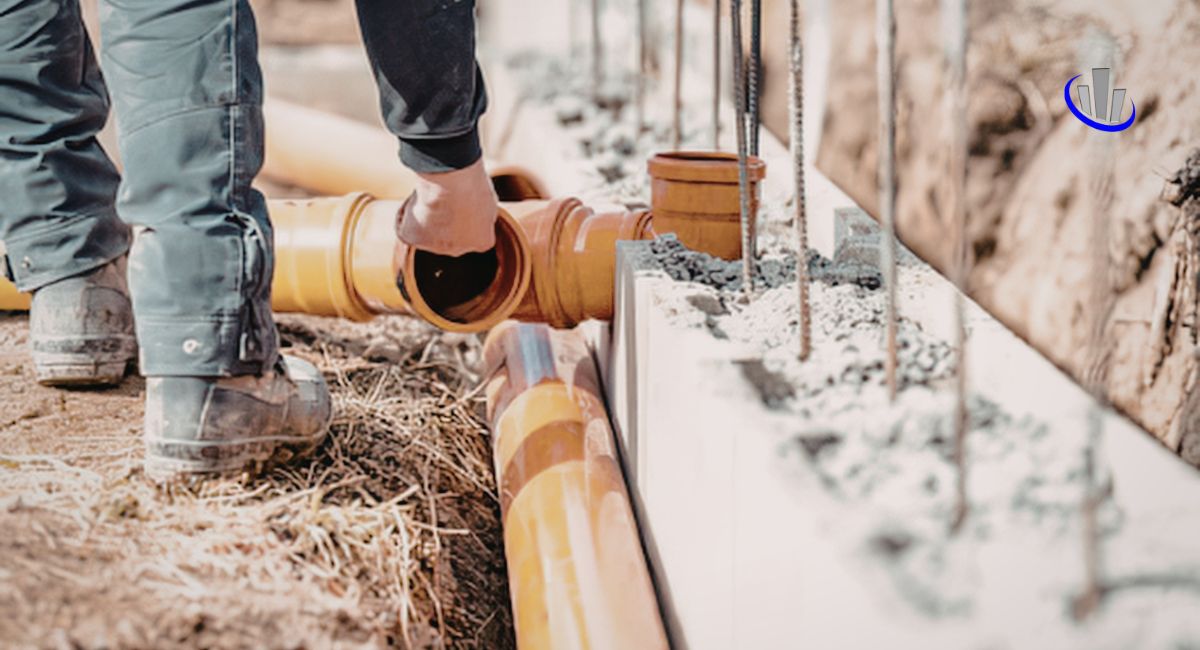
Levels need to match the design intent. Falls must achieve the specified gradients. Pipes need correct positioning and bedding. Connections need checking and testing. Drainage materials need proper installation with suitable filter fabrics and backfill. The surrounding ground needs careful preparation and compaction.
At Berkan Construction Services, we build according to approved architectural and engineering plans. We do not design homes. Instead, we work alongside each project’s professional consultants to construct what they have designed, applying the practical knowledge that comes from years of building in the Caribbean climate.
Our project management approach, informed by both tropical construction practice and European standards for documentation and quality control, helps coordinate the different elements of a build and keeps clients informed as work progresses.
Five Questions to Ask Your Project Team Before Building
If you are planning your first property in Barbados, these questions can reveal potential drainage issues before construction begins:
- Where does water naturally flow across the site during heavy rainfall?
- How will the drainage system move heavy rainfall away from the house?
- Does the property require additional drainage measures because of its slope or soil type?
- How will roof water reach the site’s drainage system without affecting foundations?
- What happens to water after it leaves the property boundary?
Good answers to these questions suggest your team is thinking about drainage properly. Vague answers suggest it needs more attention.
The Bottom Line
You may never admire your home’s drainage system. That is probably a good thing. When drainage works properly, water moves where it should without ever becoming your problem.
For anyone building in Barbados for the first time — whether you are a local resident or coming from overseas — drainage deserves attention from the earliest stages of the project. Good planning protects the structure, the landscape and your investment for decades to come.
At Berkan Construction Services, we bring practical Caribbean construction experience, disciplined project management and familiarity with international building standards to every build we manage.
Planning a property in Barbados? Contact Berkan Construction Services before you break ground. Do not leave your build to chance.
Frequently Asked Questions
Q: How much does it cost to fix drainage problems after a home is built in Barbados?
Retrofitting drainage on a completed property in Barbados typically costs several times more than installing it correctly during construction. The expense rises because finished landscaping, paving, driveways, and sometimes even structural elements must be disturbed to access the areas where drainage should have been installed. On sloping sites, remedial drainage can involve significant excavation. While exact costs depend on the property and the severity of the problem, most construction professionals agree that addressing drainage during the build, rather than after handover, is one of the best value decisions a homeowner can make.
Q: What drainage system works best for building on a slope in Barbados?
No single drainage system suits every sloping site. The right approach depends on the gradient, soil type, geology, the building’s position on the slope, and how much water the site receives during the wet season. Most sloping properties in Barbados benefit from a combination of systems: interceptor drains uphill of the building to catch water before it arrives, French drains around foundations, retaining wall drainage to manage hydrostatic pressure, and properly graded surfaces that direct runoff to controlled discharge points. Your architect and engineer will specify the right combination for your site, and an experienced construction team will build it to perform as designed.
Q: Should I include rainwater harvesting when building my home in Barbados?
Rainwater harvesting is worth considering, particularly for irrigation and other non-potable uses. Barbados experiences distinct wet and dry seasons, and storing rainfall captured during the wetter months can reduce your reliance on mains water supply during drier periods. From a construction perspective, the key is planning it into the build from the start. Tanks, pipework, filtration and connections to the site drainage system all need to be coordinated with the foundation and underground works. Your engineering consultant and the Barbados Water Authority can advise on system requirements and any applicable regulations. Retrofitting a harvesting system after construction is possible but more costly and disruptive.
About Building Better in Barbados
Building Better in Barbados is an educational series from Berkan Construction Services. We share practical advice and technical insights for anyone planning to build a luxury home or commercial property in Barbados. Our guides explore every stage of the construction journey, helping you make informed decisions and protect your investment.
Planning a project? Contact Berkan Construction Services today to discuss your build with an experienced team that understands island engineering from the ground up.